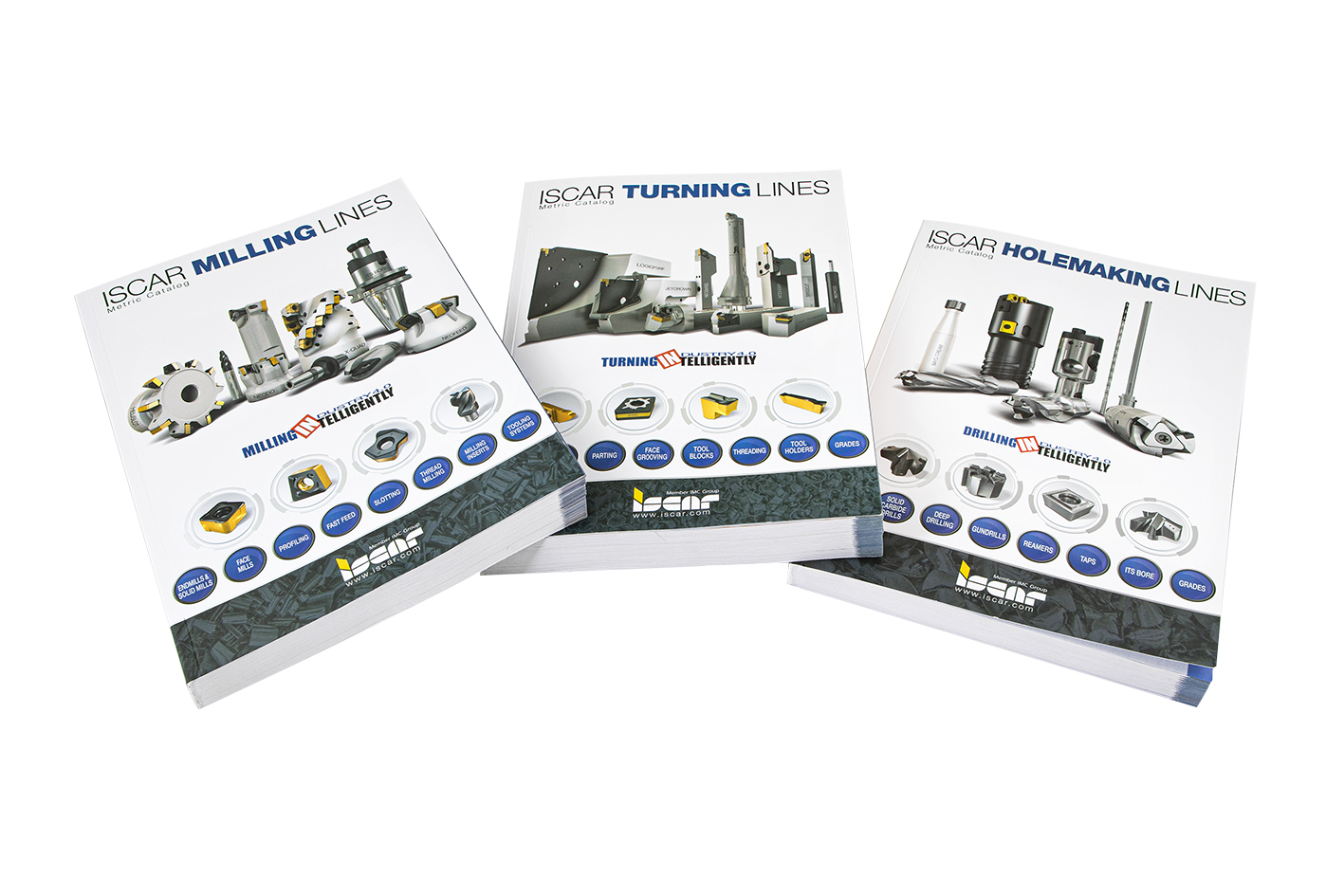
A company catalog is the best source for acquainting one with its products. The term "catalog" derives from the ancient Greek word "list". Originally, a product catalog was a printed document listing all the products a company offered. Later, the catalog incorporated more reference data, general recommendations for using products, and additional related technical information. In cutting tool manufacturing, these supplements presented the initial cutting conditions, accessories, mounting and regrinding instructions, troubleshooting, and technical information.
Computer technologies evolved the electronic version of the hard copy catalog with significantly expanded capabilities, and many more search options. A user-friendly utility software of e-catalogs facilitates optimized product search, filtering functions, visual assets, and reference data.
In metalworking, e-catalogs are becoming the dominant factor in describing a company's product range and services. The cutting tool industry is no exception. A "soft" digital product data format dominates the traditional "hard" printed methods. By utilizing online catalog information, the digital era concept of smart data-driven manufacturing prioritizes the digital component of a cutting tool as the delivered product presented.
Today, conventional paper catalogs only provide the key dimensions of a cutting tool, an indexable insert, a tool holder, and spare parts and consequently do not offer enough information. This data provided the basis for computer assisted engineering (CAE) systems, assuring a platform for independent data exchange. The global world features more intensive data transfer, and the gathering pace of digital era processes are inevitably leading to substantially increased unified data representation when building digital information for the metalworking industry.
An important step in unifying digital information related to cutting tools and tool holders already begun and was derived from the ISO 13399 standard. Following the guidelines of this standard ensures data uniformity, makes the digital twins understandable for real and virtual components of manufacturing systems, and supports real-time information exchange between the components. An ISO 13399-compatible CAE system downloads tool data directly from computer-based clouds to provide instantaneous online information. Therefore, meeting the requirements of ISO 13399 is the key feature of an effective cutting tool e-catalog.
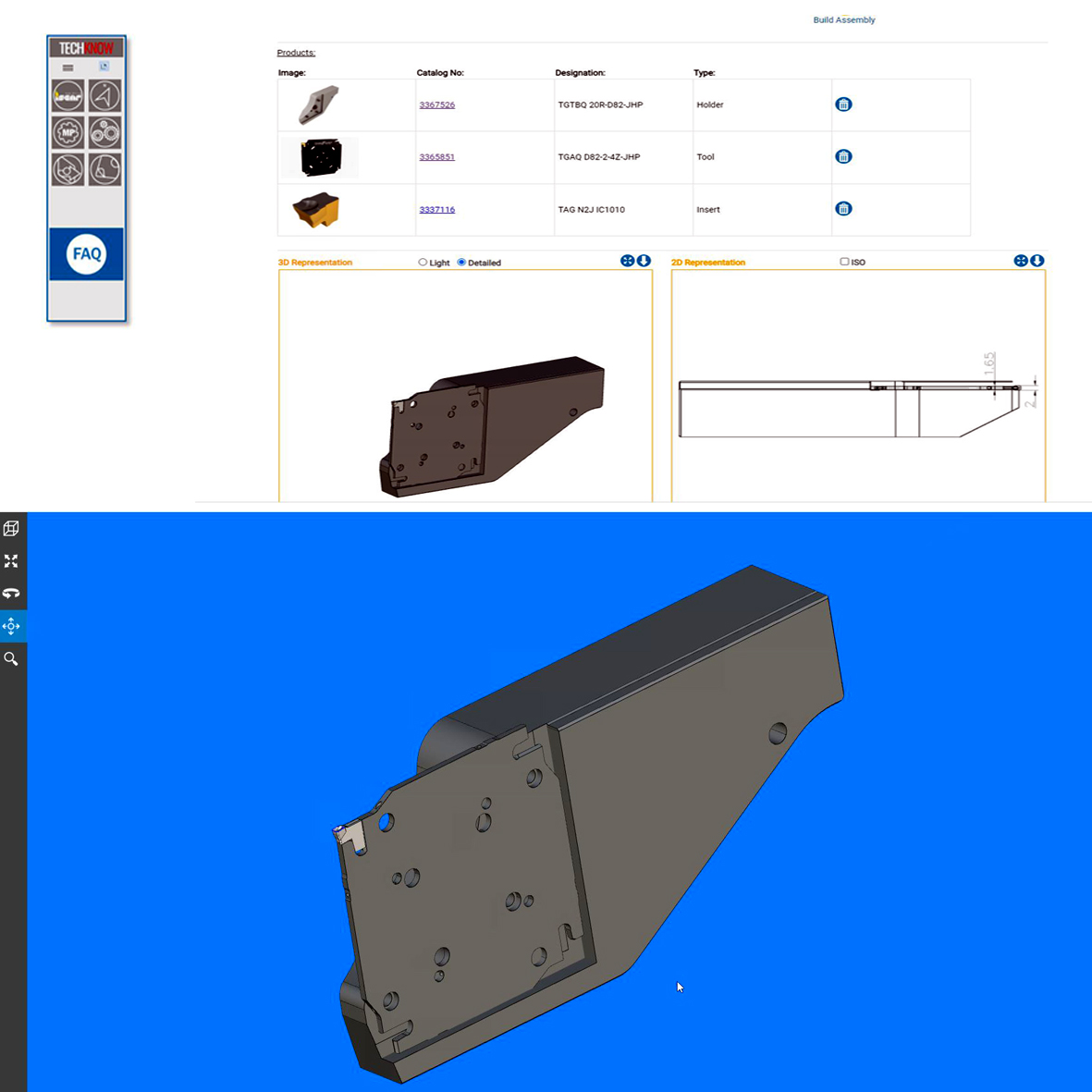
The e-catalog has built-in functions that facilitate the effective processing and filtering of information catered to customer needs. The virtual tool assembly comprises a cutting tool, indexable inserts or exchangeable cutting heads, a tool holder, extensions and reducers which help with pre-machining anti-collision planning. The tool assembly enables the download in a CAE system for virtual machining simulations to optimize cutting strategy, collision checking, improving tool configuration and other procedures for technological machining processes.
Notwithstanding, the e-catalog connects with data sources such as optimal tool selection and access to e-commerce functions. This makes the e-catalog an inseparable subsystem embedded in a world of information technologies associated with the cutting tool manufacturer.
Due to the progress in mobile phone technologies, the cutting tool e-catalog has advanced, thus providing access to tool information from virtually everywhere and delivering access to virtual tool assemblies.
Another undeniable advantage of the e-catalog, compared to the traditional paper catalog, is its ease of maintenance. Changes can be made instantaneously online, anytime.
By using the e-catalog, customers can receive an STP file independently with a .p21 extension that meets the requirements of ISO 13399 standard to transfer data for CAE systems.
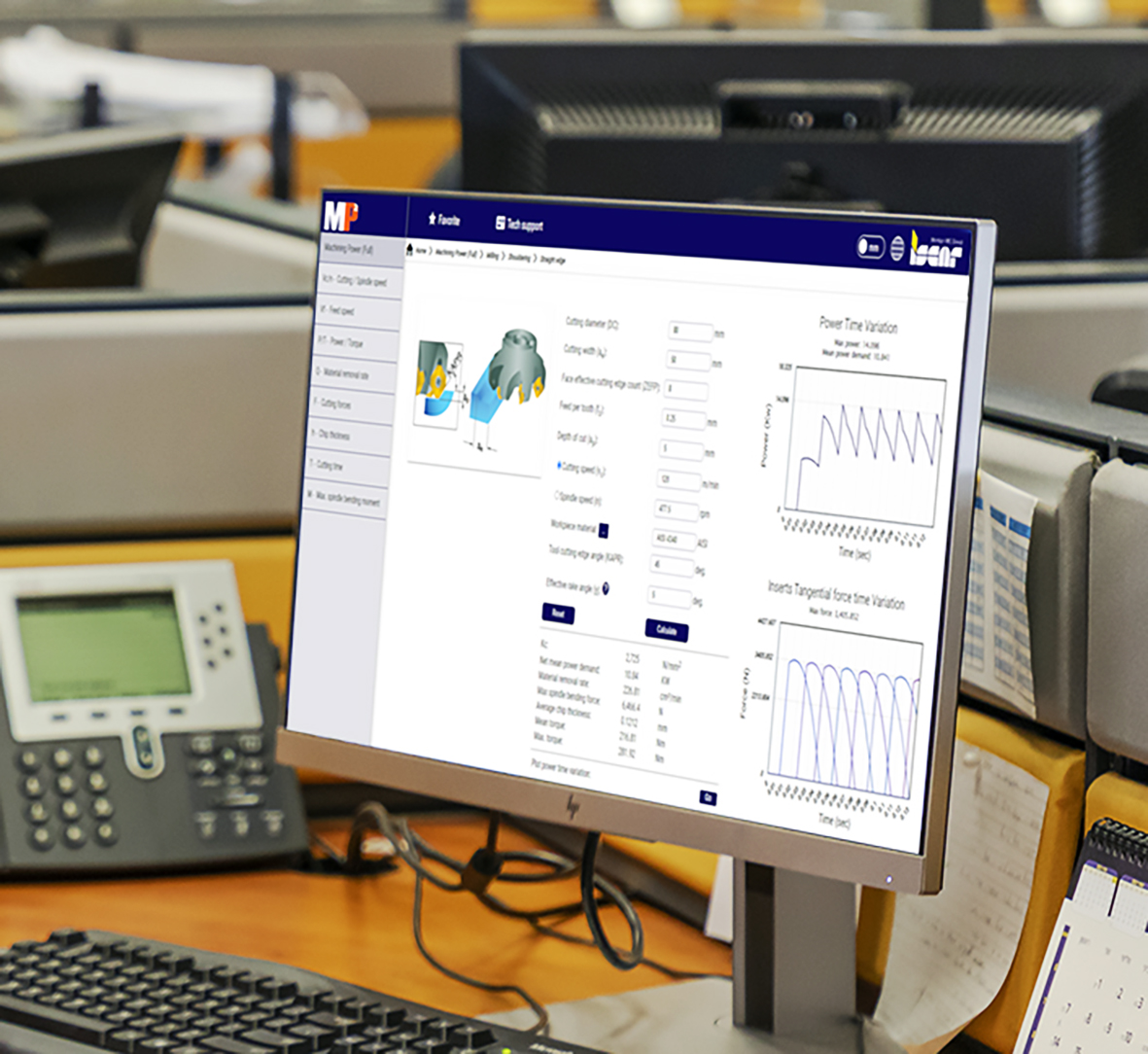
E-CAT assembly options enable generating digital twins in 3D and 2D formats for all main product lines: milling, hole making, and turning. ISCAR's e-catalog links to the New ISCAR Tool Advisor (NEOITA), which recommends the best tools for a given application. Alongside the NEOITA app is the Machining Power Calculator that estimates power consumption and cutting forces during machining, the Productive Geometries for finding inserts of alternative cutting geometry, the Grade Optimizer for the quest of equivalent cutting material grades, and the FAQ section with answers on frequently asked questions. Also, various search options facilitate finding tools, inserts, toolholders or accessories according to a designation, a family, a brand name, and more. The ISCAR E-CAT informs the customer about company promotions, provides test reports and other useful data, and is available from the simple-to-use ISCAR WORLD app, a virtual “one-stop shop” for IOS and Android platforms that integrate all ISCAR online apps and interfaces.
In metalworking, the cutting tool e-catalog is firmly rooted as an effective and diversified source of vital information and creative possibilities.
Will the e-catalog replace the paper catalog in the near future? Printed catalogs remain in demand as many customers stay avid users of paper catalogs for reasons associated with readily available information which does not rely on internet infrastructures. Cutting tool manufacturers continue to provide both product catalog versions in electronic and printed versions.
There is no doubt that the digitization of metalworking will bring the use of e-catalogs to the forefront of technology while providing additional functional values for the metalworking industries.